Tissue engineering & Regenerative medicine
3D scaffolds' for tissue regeneration
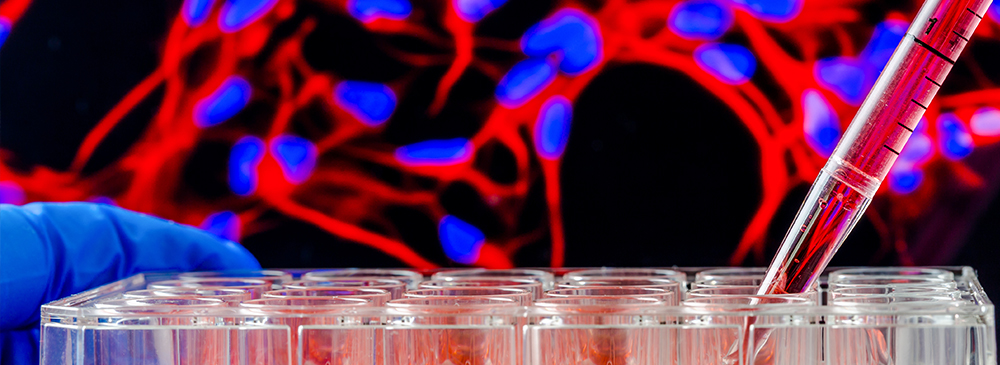
In natural tissues, the three-dimensional (3D) extracellular matrix (ECM) comprises various types of cells, including fibroblasts, stem cells, and endothelial cells, which communicate with each other directly or indirectly to regulate matrix production and cell functionality. To engineer multicellular interactions in vitro, co-culture systems have achieved tremendous success in achieving more realistic microenvironment of in vivo metabolism than monoculture system. For this reason, we fabricate biomimetic cellular scaffolds and develop co-culture system using various types of cells.
We are exploring stem cell therapy for injured tissue regeneration with developed biomimetic scaffold which can control stem cell fate. 3D encapsulation strategy produces microenvironment from which stem cell differentiate into new tissue. This approach is being utilized to promote tissue regeneration, angiogenesis, Drug screening, Artificial tissue. and other applications.
생체 조직내 줄기세포 등의 다양한 세포들은 서로 소통하며 직∙간접적으로 세포 및 세포외기질과 상호작용하고 있다. In vitro 시스템에서 세포간의 상호작용을 공학적으로 재현하기 위해 현재 공배양 시스템에 대한 연구가 진행되고 있으며, 이를 통해 실제 생체시스템을 더 면밀하게 모사하고자 하고 있다. 본 실험실에서는 이런 흐름에서 주도적으로 생체재료를 활용하여 혁신적인 공배양 시스템을 만들어가고 있다. 그 중 하나로 줄기세포치료를 위한 3D 캡슐화 기술을 사용하여 연구를 진행하고 있다.
Keywords: Stem cell, hydrogel, 3D culture system, co-culture system
Hydrogel fillers for breast reconstruction
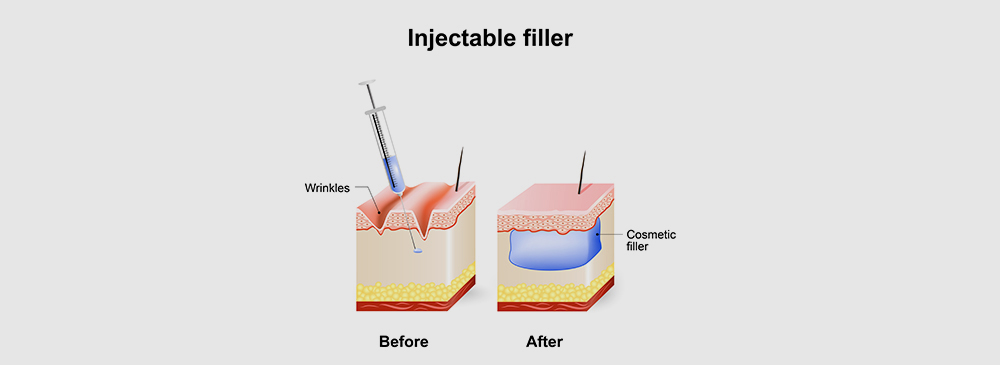
Breast reconstruction surgery has been recently increased since breast cancer patients have frequently used mastectomy more frequently. However, standard PDMS breast implants have problems such as unfavorable immune reaction and additional surgery. Conventionally practiced, incision-based breast reconstruction method is going toward non-surgical breast reconstruction. In this manner, the filler for the local site injection has been partially used as a substitute for the implant.
유방암 환자 및 유방절재수술건수가 지속적으로 증가하면서 재건수술에 필요한 보형물에 대한 관심도 함께 증가하고 있다. 현재 쓰이는 PDMS 보형물은 부작용이 심한데, 본 실험실에서는 이를 극복하기 위해 최소침습적인 방법으로 유방을 재건할 수 있는 대용량 필러를 개발하고 있다.
Keywords: Mass-scale filler, filler, breast reconstruction
3D bioprinting
3D bioprinting technology is a combination of 3D printing technology and biotechnology. With this cutting-edge technology, living cells can be rendered into desired shapes or patterns to engender tissues or organs; nonetheless, appropriate bio-ink is required to realize it. There are four significant characteristics in developing bio-ink which are printability, bio-compatibility, tunable gelation, and biomimetics. With appropriate bio-ink developed, 3D bioprinting is then made suitable for various biomedical applications, such as drug delivery, organoid, and diagnosis.
3D printing is regarded as a versatile technique for tissue engineering due to the ability to print complex 3D structures similar to that of the human tissue. It is a method requiring a precise control that deposits various materials such as polymers, ceramics, and hydrogels. 3D printing has become prominent technique in medical fields for its possible applicability in specific shaping on patient's demand.
3D 바이오프린팅기술은 3D 프린팅과 생명공학의 융합 기술이다. 3D 바이오 프린팅을 통해 살아 있는 세포를 원하는 모양과 패턴으로 출력하여 조직이나 기관을 만드는 초석을 마련할 수 있다. 이를 가능하게 하는 적절한 바이오잉크 개발이 필수적이다. 본 실험실에서는 새로운 바이오잉크 개발을 통해 약물전달이나 진단 등에도 사용할 수 있도록 연구를 진행하고 있다. 또한 3D 바이오 프린팅의 정확한 조절을 통해 환자 맞춤형 시스템을 구현하는 데에도 노력을 기울이고 있다.
Keywords: bio-ink, 3D scaffold, patient-specific, cell printing, hybrid scaffold
