Nanobiosensors
Electrochemical Biosensors
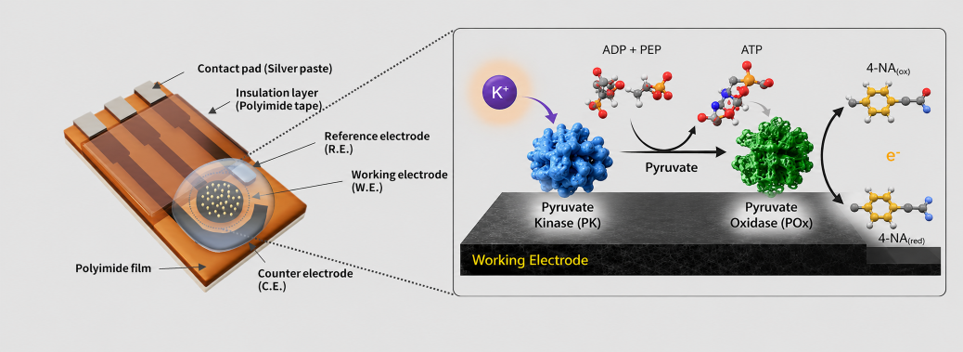
We develop electrochemical biosensors that convert molecular recognition and biochemical reactions into measurable electrical signals. By engineering ion-selective membranes, biorecognition layers, redox mediators, and electrode interfaces, our platforms enable the selective detection of physiological ions and metabolites. In addition, these sensing strategies are designed with practical translation in mind, supporting portable and user-friendly diagnostic applications.
본 연구실은 분자인식 및 생화학 반응을 측정 가능한 전기 신호로 변환하는 전기화학 바이오센서를 개발한다. 이온선택성 막, 생체인식층, 산화·환원 매개체 및 전극 계면을 정밀하게 설계함으로써 생체이온과 대사물질을 선택적으로 검출할 수 있는 플랫폼을 구현한다. 또한 이러한 센서 기술은 휴대형 및 사용자 친화적 진단 시스템으로의 확장을 고려하여 개발되고 있다.
Keywords: electrochemical sensing, signal transduction, POCT(point of care testing), calibration free
LIG(Laser-Induced Graphene) Electrode Platform
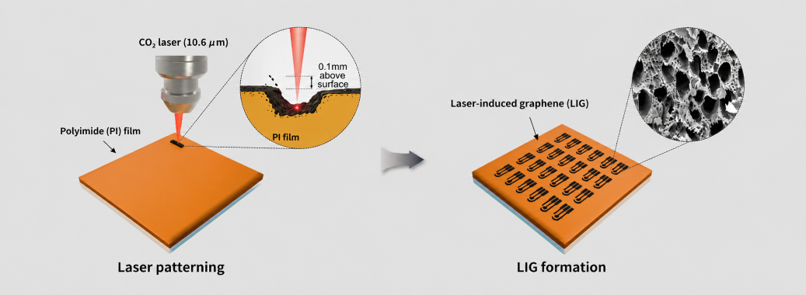
Laser-induced graphene (LIG) provides a versatile electrode platform for next-generation biosensors. By directly patterning polyimide substrates with laser irradiation, porous conductive electrodes can be fabricated without complex lithographic processes. Owing to their high surface area, electrical conductivity, and flexible patterning capability, LIG electrodes serve as a robust interface for integrating membranes, enzymes, and other sensing elements.
레이저 유도 그래핀(LIG)은 차세대 바이오센서를 위한 범용 전극 플랫폼을 제공한다. 폴리이미드 기판에 레이저를 직접 조사하여 복잡한 리소그래피 공정 없이도 다공성 전도성 전극을 형성할 수 있다. 높은 표면적, 우수한 전기전도성, 그리고 자유로운 패터닝 특성을 바탕으로 LIG 전극은 막, 효소 및 기타 센서 기능층을 효과적으로 집적할 수 있는 안정적인 바이오센서 계면으로 활용된다.
Keywords: porous electrode, flexible platform, surface functionalization, biosensor interface
Nanomaterial-Based Catalytic Biosensing
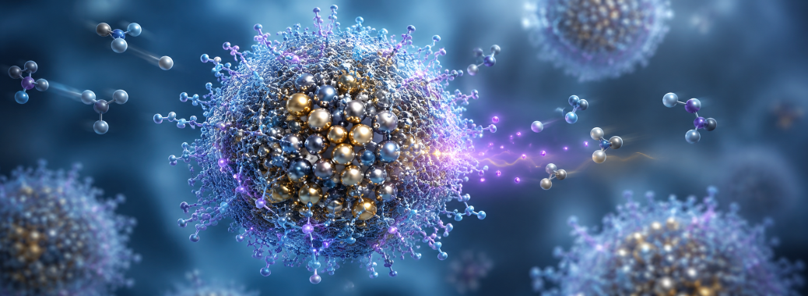
We also investigate nanomaterial-based catalytic biosensing strategies that amplify bioanalytical signals through engineered nano-interfaces. In particular, multimetallic nanostructures and nanozymes are designed to mimic enzyme-like catalytic activity and to enhance sensing performance. These nanomaterial platforms enable concentration-dependent signal generation, such as colorimetric or electrochemical outputs, for the detection of small molecules and biochemical targets.
본 연구실은 나노소재 기반의 촉매 바이오센싱 기술도 함께 연구하고 있으며, 이를 통해 바이오분석 신호를 효과적으로 증폭하고자 한다. 특히 다중 금속 나노구조체 및 나노자임을 설계하여 효소 유사 촉매 활성을 구현하고, 센서 성능을 향상시키는 플랫폼을 개발하고 있다. 이러한 나노소재 플랫폼은 소분자 및 생화학적 표적의 농도에 따라 색 변화 또는 전기화학 신호를 생성할 수 있어 다양한 바이오센싱 응용에 활용될 수 있다.
Keywords: nanomaterials, catalytic sensing, nanozyme, signal amplification, colorimetric detection
Diagnostic Biosensors for Alzheimer's disease
As degenerative diseases increase due to global trend in population aging, so does the interest in preventive approaches. As a result, there is an increasing demand for a highly selective and sensitive biosensor that detects disease is inducing factors in advance. Biosensors utilizing conjugated polymers are a compatible diagnostic system for various diseases when applied with adjusted modification of parts.
세계 인구가 노화됨에 따라 퇴행성 질환도 늘어나고, 이에 따른 예방 치료 연구도 활발히 이루어지고 있다. 이에 겸하여 고민감성 그리고 고선택성 바이오센서를 통해 미리 질병관련 인자를 밝혀 진단할 수 있는 연구도 아주 활발히 진행중이다. 본 연구실에서는 복합 고분자시스템을 통해 알츠하이머 등 다양한 퇴행성 질환을 진단할 수 있는 바이오센서를 개발하고 있다.
Keywords: PDA, exosome, biosensor, diagnostic kit